

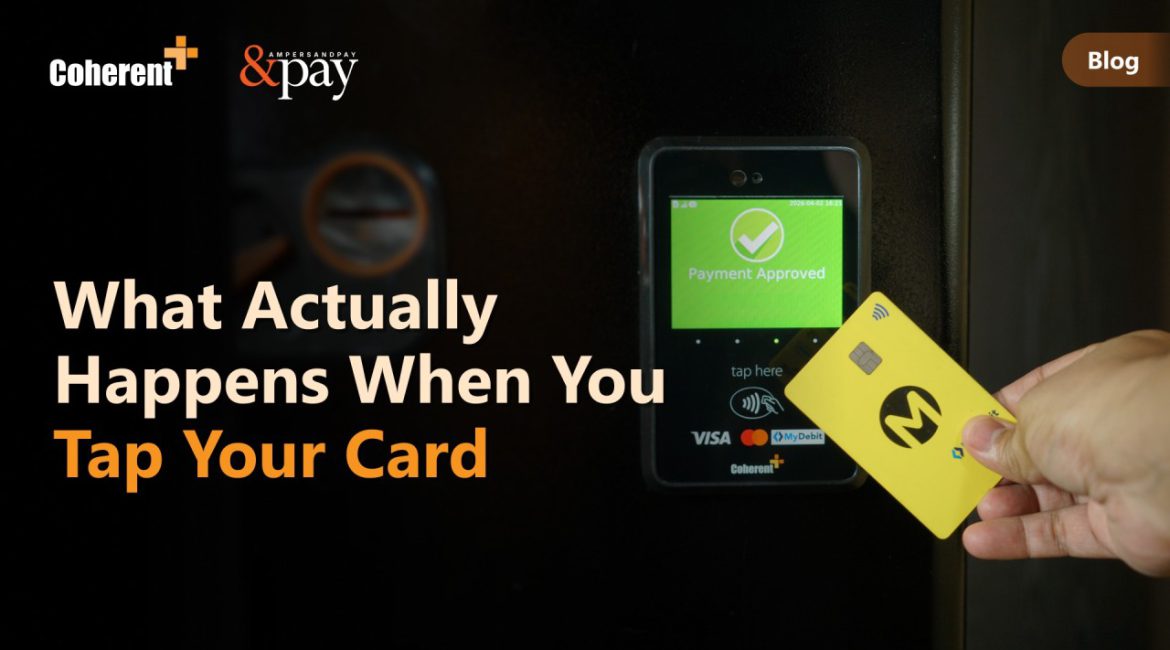
Behind every tap could be a thousand-mile journey that lasts just seconds
You tap your card against the payment terminal.
A familiar beep sounds, a green light appears, and within a second or two the transaction is approved. You collect your receipt and continue with your day without giving it another thought.
For most people, that brief moment is all there is to a card payment.
Yet behind those few seconds lies one of the most sophisticated network of digital infrastructure we use every day.
Before a payment can be approved, information travels securely between multiple organisations, sophisticated fraud detection systems analyse the transaction in real time, and financial institutions work together to determine whether the payment should proceed. All of this happens so quickly that it feels almost instantaneous.
Modern payments have become remarkably simple for consumers precisely because they have become remarkably sophisticated behind the scenes.
It is much more than a payment terminal
One of the biggest misconceptions about card payments is that the payment terminal simply communicates with the customer’s bank.
The reality is considerably more complex.
When a customer taps their card, smartphone, or wearable device, the payment request begins travelling through an ecosystem involving several different participants. These typically include the merchant’s payment provider or acquiring bank, the card network, such as Visa or Mastercard, the customer’s issuing bank, and a range of supporting security and fraud prevention systems.
Each organisation performs a specific role.
The merchant’s payment provider receives the transaction and forwards it through the appropriate payment network. The network identifies which bank issued the card and securely routes the request for authorisation. The issuing bank then decides whether the transaction should be approved based on available funds, account status, security checks, and fraud monitoring before sending its decision back through the same route to the merchant.
For example, imagine an American tourist travelling on the MEX highway, and uses their US Visa card at the Putrajaya toll plaza. In under 3 seconds, the transaction is approved, the barrier is raised, and they proceed on their drive.
Behind the scenes, this transaction took a lightning-fast 18,800-mile round trip. It started at the toll plaza where the encrypted data was sent to the local acquirer’s payment processing server. It was then routed to Visa’s global hub located in Virginia, US, checking if the card is valid. It then goes to the US bank that issued the card to verify the funds and limits of the card. Once approved, it is returned through the same route it came, back to the MEX toll barrier.
Although this sounds like a lengthy and complicated process, it is designed to happen in just a couple of seconds. According to EMVCo, the global standards body responsible for EMV payment specifications, billions of secure EMV transactions are processed every year using this highly coordinated approach. (1)
Speed has become an expectation
Consumers rarely stop to appreciate how quickly payments are processed because they have become accustomed to the experience.
Research from PYMNTS Intelligence shows that speed and convenience continue to influence payment preferences and customer satisfaction, with consumers increasingly expecting frictionless checkout experiences regardless of whether they are shopping in-store, online, or through self-service environments. (5)
This expectation extends beyond traditional retail.
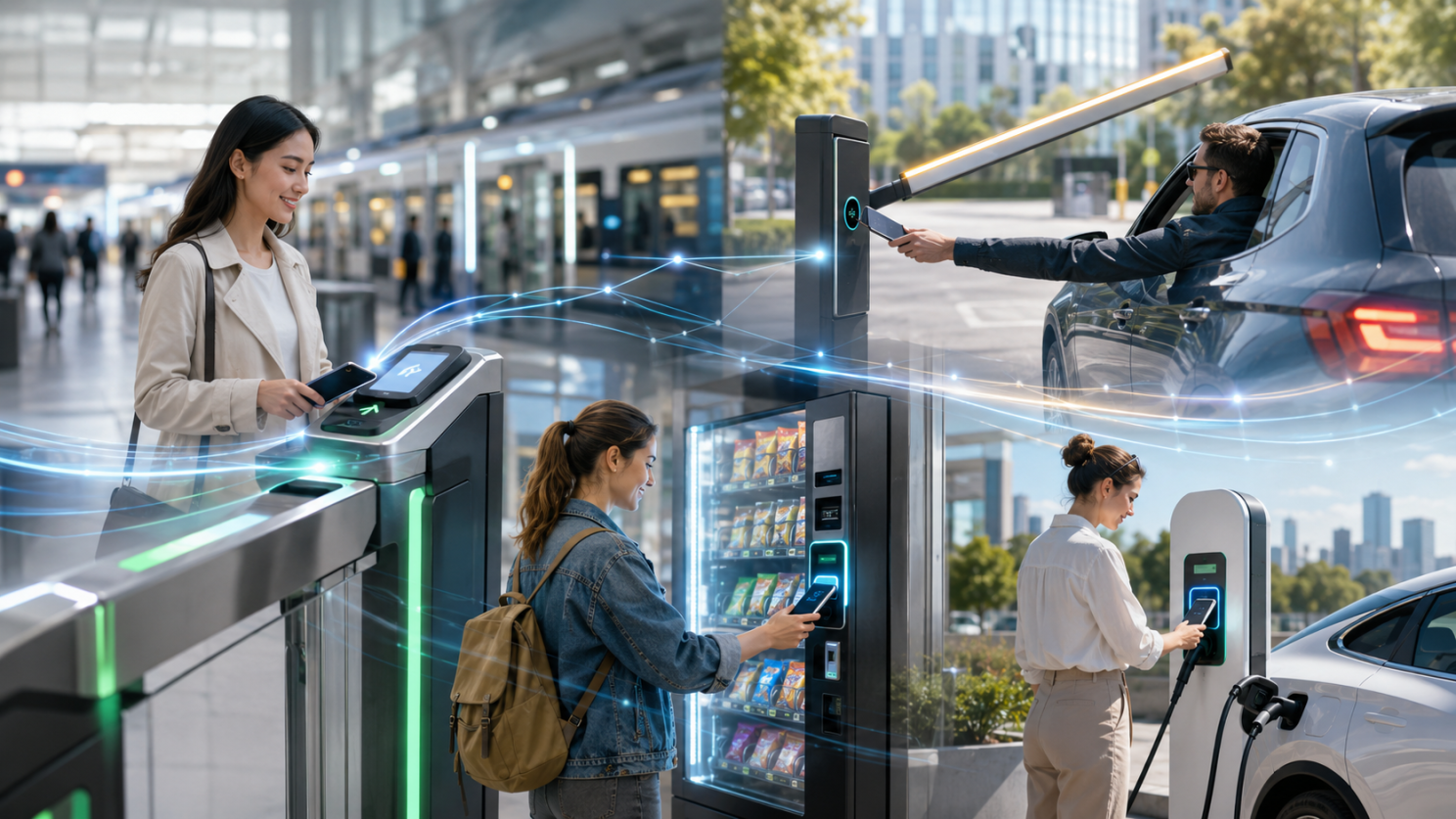
Passengers tapping into public transport expect gates to open immediately. Drivers using automated parking systems expect barriers to lift without delay. Customers using vending machines or EV chargers expect transactions to complete almost instantaneously.
Every additional second introduces uncertainty and frustration.
Behind every smooth customer experience therefore lies infrastructure specifically designed to minimise latency while maintaining security and reliability.

Security begins before the payment is approved
Speed is only one part of the equation.
Every transaction must also be secure.
When a contactless payment is initiated, sensitive payment information is protected using encryption and EMV security standards that make it extremely difficult for criminals to intercept or reuse transaction data. (2) Many digital wallets, like Apple Pay or Samsung Pay, also use tokenisation, replacing the actual card number with a unique digital token that has little value if intercepted. (3)
Behind the scenes, issuing banks and payment providers perform numerous checks before approving the transaction.
These systems may verify whether the card is valid, whether sufficient funds or available credit exist, whether the payment location matches previous spending patterns, and whether the transaction exhibits characteristics commonly associated with fraud.
Increasingly, these assessments are supported by artificial intelligence and machine learning. Rather than relying solely on predefined rules, modern fraud detection platforms continuously analyse payment behaviour to identify suspicious activity while reducing unnecessary declines for legitimate customers. (4)
This balance between security and convenience is one of the defining characteristics of today’s payment ecosystem. Customers expect transactions to be both instantaneous and trustworthy, and achieving both simultaneously requires sophisticated technology working continuously in the background.
Approval is only one part of the journey
The confirmation message on the terminal gives the impression that the payment has finished.
In reality, it has only reached the end of its first stage.
Once authorised, the transaction enters the settlement process, where funds are transferred between financial institutions before eventually reaching the merchant. The payment must then be recorded accurately within financial systems, reconciled against settlement reports, and reflected correctly in the merchant’s accounts.
These operational processes are largely invisible to customers, but they are critical to businesses. Without accurate settlement and reconciliation, merchants cannot confidently manage cash flow, investigate disputes, or maintain reliable financial records.
As businesses support an increasing variety of payment methods including cards, QR payments, account-to-account transfers, e-wallets, subscriptions, and unattended payment environments, these back-office processes have become just as important as the payment itself.
The customer experiences a transaction lasting only seconds.
The merchant manages a payment lifecycle that may continue well beyond the point of approval.
Why payment infrastructure matters more than ever
The continued growth of digital payments has expanded far beyond traditional retail.
Today, payments occur across transit networks, parking facilities, healthcare, hospitality, vending, fuel stations, EV charging infrastructure, and countless unattended environments where there may be little or no staff present.
In these environments, reliability becomes just as important as speed.
A delayed or unsuccessful payment may inconvenience a shopper.
A failed payment at a transport gate or parking exit can interrupt the flow of hundreds of people.
As payment ecosystems become increasingly interconnected, the infrastructure supporting them must deliver consistent performance across every channel while remaining secure, scalable, and easy to manage.
This is one reason the payments industry has shifted its focus from simply enabling transactions to building resilient payment ecosystems capable of supporting growing operational complexity.
Where AmpersandPay and CoherentPlus fit
This broader view of payments shapes how AmpersandPay approaches merchant payment management.
Payment acceptance is only one part of the merchant journey. Businesses also require visibility into transactions, reliable settlement processes, and operational tools that simplify day-to-day management across multiple payment channels. By bringing these capabilities together within a unified environment, merchants can spend less time managing payment operations and more time focusing on their customers.
At the infrastructure layer, CoherentPlus enables connected payment ecosystems across retail, transit, parking, EV charging, vending, and other unattended environments where fast, secure, and reliable payment processing is essential. As payment ecosystems continue to evolve, integrated infrastructure plays an increasingly important role in ensuring that every transaction, from the first tap to the final settlement, works seamlessly.
Final thoughts
Contactless payments have become so effortless that most of us barely notice them anymore.
That simplicity is one of modern payments’ greatest achievements.
Behind every successful tap is an ecosystem involving payment terminals, acquiring banks, card networks, issuing banks, fraud detection systems, settlement platforms, and merchant infrastructure, all working together in less time than it takes to blink.
Most customers will never think about what happens after they tap their card.
They shouldn’t have to.
The best payment infrastructure is the infrastructure that remains invisible. It quietly delivers speed, security, and reliability every single time, allowing businesses to focus on serving customers while consumers simply enjoy the convenience of modern digital payments.
References
(1) EMVCo. About EMV Specifications https://www.emvco.com/
(2) EMVCo. Contactless Specifications https://www.emvco.com/emv-technologies/contactless/
(3) Visa. Visa Token Service https://corporate.visa.com/en/solutions/tokenization.html
(4) Mastercard. Artificial Intelligence in Fraud Detection https://www.mastercard.com/news/
(5) PYMNTS Intelligence. The 2025 Global Digital Shopping Index https://www.pymnts.com/
(6) Bank for International Settlements (BIS). Fast Payments and Modern Payment Infrastructure https://www.bis.org/