

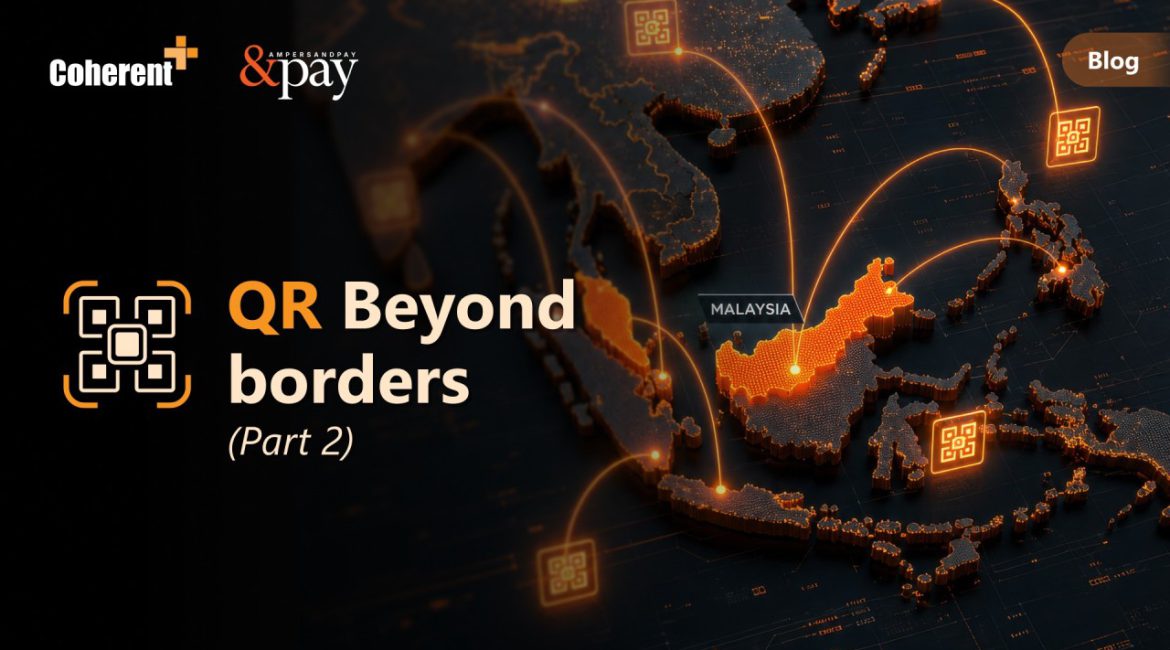
Most Malaysian merchants do not think of themselves as international businesses
A café in Penang. A retailer in Johor Bahru. A kopitiam in Kuala Lumpur.
In the first part of this series, QR Beyond Borders: How Southeast Asia Is Building a Regional Payment Network, we explored how countries across ASEAN are connecting their domestic payment systems to create a more seamless cross-border payment experience. Through initiatives such as DuitNow QR, PromptPay, SGQR, and QRIS, what began as a collection of national payment schemes is gradually evolving into a more connected regional ecosystem.
But what does this mean for businesses on the ground?
Most Malaysian merchants do not view themselves as participants in international commerce. They serve local communities, regular customers, and domestic demand. When conversations turn to cross-border payments, many business owners assume the topic is relevant only to exporters, multinational corporations, or large e-commerce platforms.
Yet that perception is becoming increasingly outdated.
Every day, regional visitors walk through Malaysian shopping centres, dine in local restaurants, stay in hotels, use transportation services, and visit tourist attractions. While the transaction takes place locally, the customer’s financial journey often begins in another country.
A visitor from Singapore may use a banking application issued in Singapore. A tourist from Thailand may rely on payment services they use every day at home. Increasingly, these customers expect the same level of convenience when travelling as they experience in their domestic market.
This is where cross-border QR payments begin to change the conversation.
As Southeast Asia’s payment ecosystems become more interconnected, regional spending is becoming easier to capture. Customers no longer need to search for currency exchange counters, carry large amounts of cash, or worry about whether their preferred payment method will be accepted. Instead, they can increasingly pay using familiar banking applications and payment experiences they already trust.
For merchants, this represents a significant shift in accessibility.
The question is no longer whether international visitors can pay digitally. Increasingly, they can. The more important question is whether businesses are positioned to benefit from this growing regional connectivity.
Cross-border QR payments are not simply about making transactions easier. They are about reducing friction between businesses and potential customers. Every barrier removed from the payment process makes it easier for a visitor to become a paying customer.
In a region of more than 680 million people, where tourism, business travel, and regional mobility continue to grow, that matters.
Because the future of regional commerce may not be defined by how many businesses expand overseas.
It may be defined by how effectively local businesses can serve customers who arrive from across the region.
Part 1: QR Beyond Borders: How Southeast Asia Is Building a Regional Payment Network https://www.linkedin.com/pulse/qr-beyond-borders-how-southeast-asia-building-regional-vfbcc
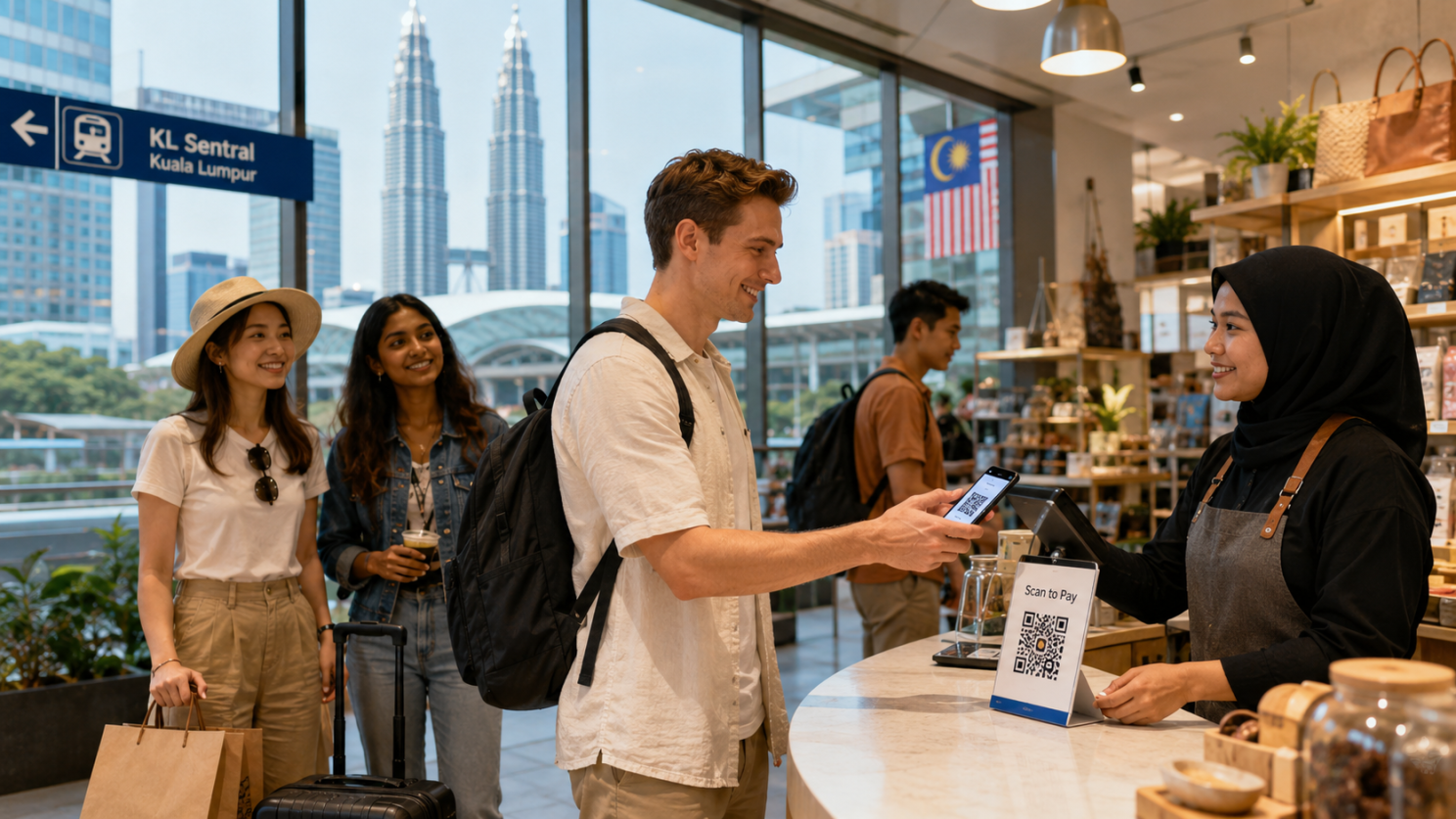
International spending is becoming more accessible
Historically, attracting spending from international visitors often depended on how easily a merchant could accommodate foreign payment methods.
Cash remained common because travellers were uncertain about card acceptance. International card payments were convenient but sometimes came with concerns around fees, foreign exchange rates, or merchant acceptance.
Cross-border QR payments help reduce many of these barriers.
Through payment connectivity initiatives between countries such as Malaysia, Thailand, Singapore, and Indonesia, consumers can increasingly make purchases using banking or eWallet applications linked to their domestic accounts.(1)
The payment experience becomes familiar, even when the location is not.
This may sound like a small improvement, but customer behaviour is often shaped by convenience. When spending feels easier, consumers are generally more willing to complete purchases, explore additional services, and transact more frequently throughout their journey.
For merchants, reducing friction can have a direct impact on customer engagement.
Tourism and hospitality may be among the biggest winners
One of the most immediate opportunities lies within tourism-related industries.
Hotels, resorts, attractions, restaurants, cafés, transportation providers, and tourism operators all depend heavily on visitor spending.
Malaysia welcomed more than 25 million international tourist arrivals before the pandemic and continues to prioritise tourism as a major economic driver.(2) Many of these visitors originate from neighbouring ASEAN markets where QR payments and digital banking have become part of everyday life.
Imagine a visitor from Thailand arriving in Penang.
If they can pay for meals, transportation, attraction tickets, and shopping using the same QR payment application they use at home, the overall travel experience becomes significantly smoother.
The merchant benefits because payment barriers disappear.
The customer benefits because spending feels familiar and convenient.
While no single payment method determines tourism success, the overall visitor experience increasingly includes the payment journey itself.
Retailers stand to gain from a more connected region
Retail may be another sector where the impact becomes increasingly visible.
Visitors travelling across Southeast Asia often spend heavily on shopping, whether they are purchasing luxury goods, electronics, local products, beauty items, or everyday necessities.
Traditionally, payment uncertainty could create hesitation during checkout. Customers might limit spending if they were concerned about foreign transaction fees or unfamiliar payment systems.
Cross-border QR connectivity helps remove some of that uncertainty.
A visitor from Singapore or Thailand can increasingly encounter a payment experience that feels remarkably similar to what they use at home.
For retailers, this creates an opportunity to focus on what matters most: the customer experience, product offering, and service quality.
The transaction itself becomes less of a barrier.
This is particularly relevant in destinations such as Kuala Lumpur, Penang, Langkawi, Malacca, and Johor Bahru, where international visitor traffic contributes significantly to local commerce.
Johor Bahru may offer a glimpse into the future
Few locations demonstrate the potential of cross-border QR payments better than Johor Bahru.
Millions of travellers move between both Malaysia and Singapore annually for work, shopping, leisure, education, and business. Over half a million people cross Johore-Singapore border on a daily basis, making it the busiest international land border crossing in the world. (3)
As payment interoperability improves, businesses operating within this corridor may find themselves increasingly connected to Singaporean consumers without changing their core business model.
A retailer in Johor Bahru does not necessarily need to become an international business to benefit from regional spending.
Regional spending may simply become easier to access.
A similar opportunity exists in northern Malaysia, where tourism and commercial activity frequently involve travellers from Thailand.
As payment systems become more interconnected, border regions could emerge as some of the earliest beneficiaries of regional payment connectivity.
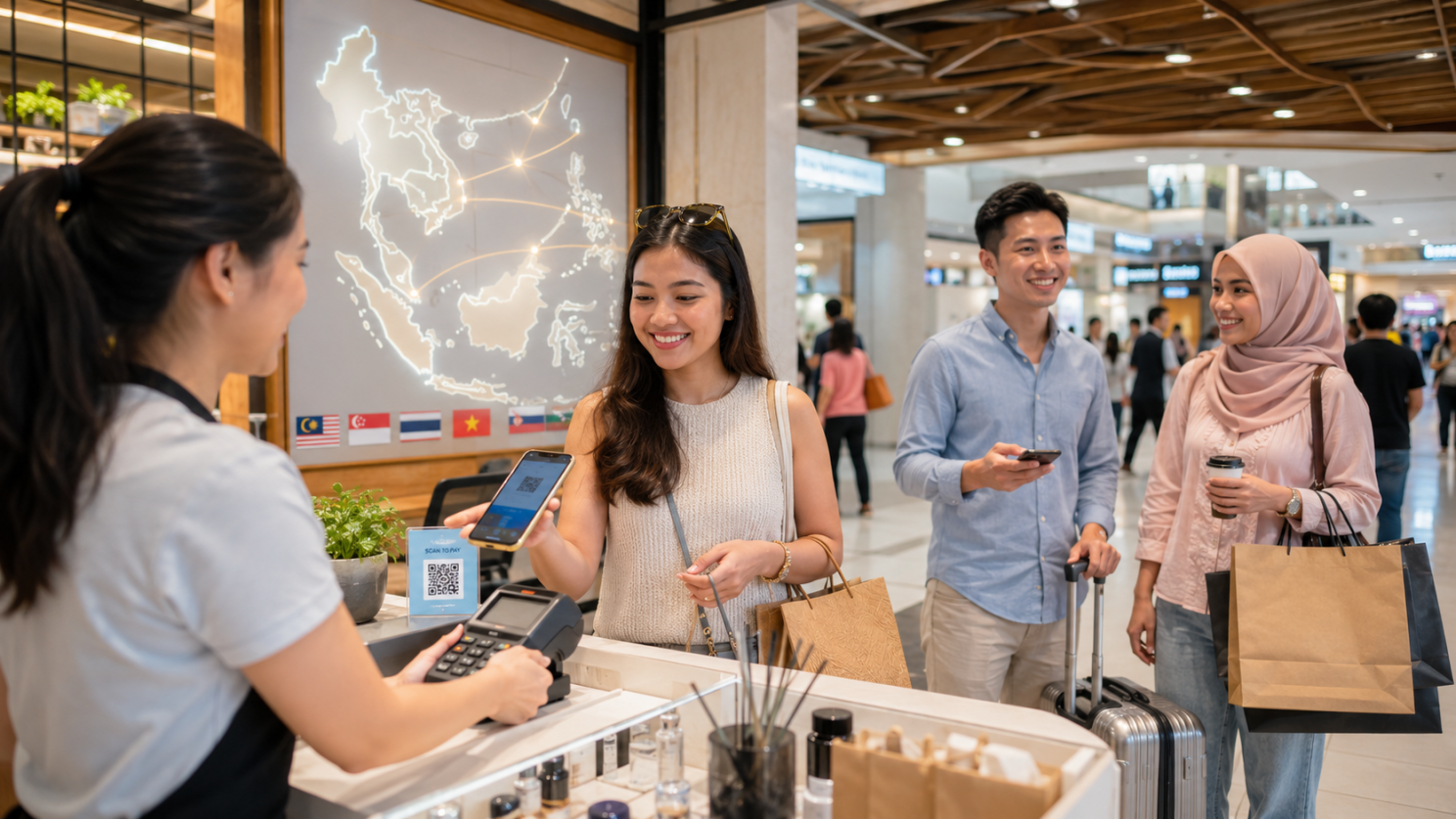
Customer experience is becoming a competitive advantage
One of the most overlooked aspects of digital payments is their influence on customer perception.
Consumers rarely remember payment experiences when everything works smoothly.
They remember them when they do not.
A traveller who struggles to find cash, encounters payment acceptance issues, or experiences uncertainty during checkout is more likely to remember the inconvenience than the transaction itself.
Cross-border QR payments help eliminate some of these pain points.
For merchants, this contributes to a broader trend. Customer experience is no longer limited to product quality, pricing, or service.
The payment experience has become part of the overall brand experience.
Businesses that make transactions easier often create stronger customer impressions, even when customers do not consciously recognise why.
The operational side still matters
While customer convenience receives much of the attention, merchants cannot afford to focus exclusively on the front-end experience.
Supporting additional payment channels introduces operational responsibilities.
Businesses still need visibility into:
- transaction reporting
- reconciliation processes
- settlement management
- payment performance
This becomes increasingly important as merchants operate across multiple channels and payment methods simultaneously.
The challenge in 2026 is no longer simply accepting digital payments. Most businesses already do.
The challenge is managing them efficiently.
Without integration, additional payment options can create fragmentation. Merchants may find themselves switching between platforms, reconciling multiple reports, and managing disconnected operational workflows.
This is why payment acceptance and payment management must increasingly be viewed together.
Why integration matters more than ever
As regional payment connectivity expands, integration becomes even more important.
The businesses that benefit most from cross-border QR payments may not necessarily be those accepting the largest number of payment methods.
Instead, they may be the businesses that manage those payment methods most effectively.
Connected reporting, operational visibility, and unified payment management help ensure that growth does not create unnecessary complexity.
For merchants, the goal is not simply accepting more payments.
It is creating a payment environment that can scale efficiently as customer expectations continue to evolve.
Where AmpersandPay and CoherentPlus fit
This shift toward connected payment ecosystems reflects how AmpersandPay and CoherentPlus approach digital payments.
AmpersandPay focuses on helping merchants unify payment acceptance across physical and online channels while improving visibility into transactions, reporting, and day-to-day payment management.
At the infrastructure layer, CoherentPlus supports payment ecosystems across retail, transit, parking, EV charging, vending, and other unattended environments where reliability, scalability, and interoperability are critical.
As cross-border QR payments continue expanding throughout Southeast Asia, businesses will increasingly require payment environments that support both customer convenience and operational efficiency.
Final thoughts
Cross-border QR payments are often discussed as a convenience feature for travellers.
In reality, they may become one of the most practical ways for Malaysian merchants to participate in Southeast Asia’s growing digital economy.
The opportunity is not simply about accepting payments from foreign visitors.
It is about becoming more accessible to a region of more than 680 million people who are increasingly connected through shared digital infrastructure.(4)
As payment barriers continue to fall, regional commerce becomes easier, faster, and more natural.
For Malaysian merchants, that means the next customer may not be arriving from across town.
They may be arriving from across the region.
References
(1) ASEAN Regional Payment Connectivity Initiative https://asean.org/
(2) Tourism Malaysia Visitor Statistics https://www.tourism.gov.my/
(3) Immigration & Checkpoints Authority Singapore Travel Statistics https://www.ica.gov.sg/
(4) ASEAN Key Figures and Population Statistics https://asean.org/